
Long-Term Leasing in Dubai: What Property Owners Should Know in 2026
The real estate market in Dubai has experienced continuous changes throughout its history, yet the upcoming 2026 will serve as a crucial turning point for property owners. The process of long-term leasing in Dubai has transformed from a simple contract signing procedure into a comprehensive practice that requires property owners to handle new regulatory developments and changing demands from their tenants. The market demands a strategic approach, which requires both compliance with regulations and an assessment of future market developments.
If you’re a property owner or planning to become one, this guide breaks down what you need to know, from property leasing rules in Dubai to emerging Dubai leasing market trends in 2026, and how to stay compliant with rental laws for landlords in Dubai.
Why Long-Term Leasing in Dubai Still Makes Sense in 2026
Despite the rise of short-term holiday rentals, long-term leasing in Dubai remains one of the most stable investment approaches. Why?
- Consistent rental income
- Lower tenant turnover costs
- Fewer operational headaches
- Stronger tenant-landlord relationships
Dubai’s growing expatriate population, expanding business ecosystem, and family-friendly visa reforms have boosted demand for annual rental contracts. According to insights from the Dubai Land Department, residential rental transactions have continued to increase year-on-year, signaling steady growth.
Understanding Property Leasing Rules in Dubai
Before you lease out your property, you need to be fully aware of the property leasing rules in Dubai. These regulations are primarily governed by the Real Estate Regulatory Agency (RERA).
Here’s what you should know:
1. Ejari Registration is Mandatory
Every tenancy contract must be registered through Ejari. This ensures legal recognition and protects both parties.
2. Rental Increase Regulations
Landlords can only increase rent in accordance with the RERA Rental Index. Arbitrary hikes are not allowed.
3. Notice Period for Eviction
Landlords need to give tenants 12 months of written notice through notarized letters or registered mail when they plan to evict tenants because of property sales or personal use.
The property leasing rules in Dubai provide landlords with essential protection against disputes and penalties, which also help them preserve their professional standing.
Rental Laws for Landlords in Dubai: What’s New in 2026?
The rental laws for landlords in Dubai have evolved to create a system that operates with transparent and fair standards. The year 2026 requires businesses to give their most strategic focus to compliance efforts.
Landlords need to pay attention to these main areas of expertise ,which define their business operations.
- Security Deposit Regulations – Typically 5% for unfurnished properties and 10% for furnished units.
- Maintenance Responsibilities – Major maintenance is the landlord’s responsibility unless otherwise specified.
- Dispute Resolution – The Rental Dispute Settlement Centre (RDSC) handles tenant conflicts efficiently.
The rental laws for landlords in Dubai enable you to understand the legal boundaries that your business operations must follow. People who lack knowledge must pay fines because they do not understand that their lack of knowledge does not protect them from penalties.
Dubai Leasing Market Trends in 2026
- Rising Demand in Suburban Communities
- Tenant Preference for Larger Units
- Higher Compliance Expectations
- Stable Yields in Key Areas
These Dubai leasing market trends in 2026 highlight a more mature and structured market, one where well-informed landlords, who stay updated and proactive, are the ones who truly succeed.
CONCLUSION
The current market conditions, together with population growth and investor trust, and the implementation of transparent market regulations, create a strong foundation that property owners can use to achieve their leasing goals through long-term lease agreements with their Dubai properties.
You need to understand property leasing rules in Dubai, together with Dubai rental laws for landlords and Dubai leasing market trends, which will develop in 2026.
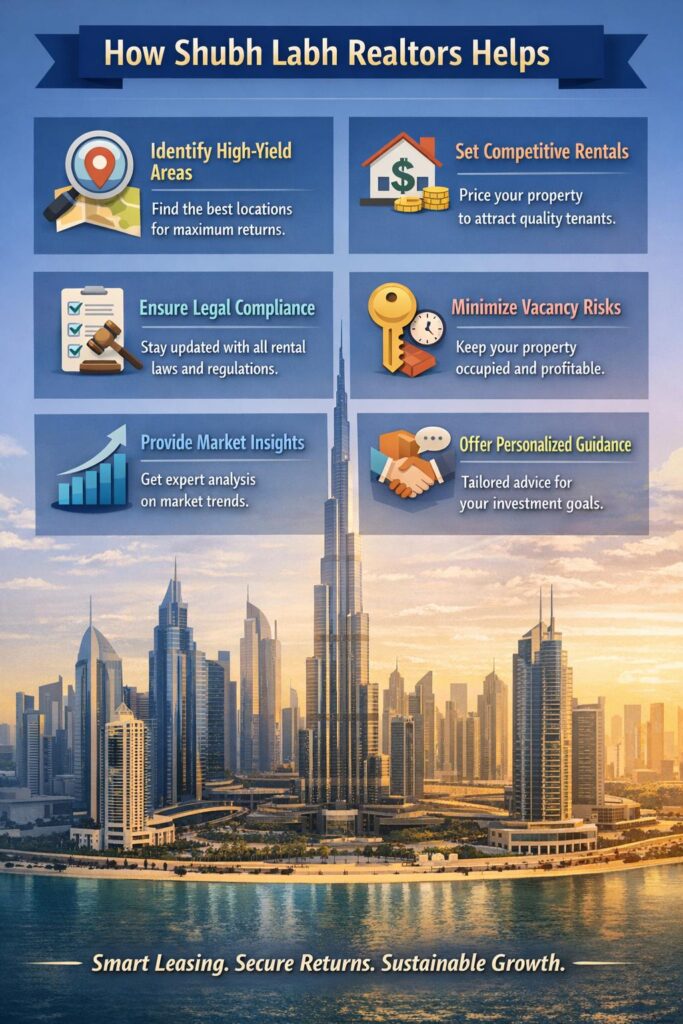
Shubh Labh Realtors provides solutions for this problem. Shubh Labh Realtors helps both new landlords and existing landlords who want to increase their property holdings through enhanced leasing practices, which result in better security and higher profits.
With Shubh Labh Realtors, 2026 isn’t just another year; it’s your opportunity to lease with confidence.
Shubh Labh Realtors: Smart Leasing, Secure Returns, and Sustainable Growth.
FAQ’S
Is long-term leasing in Dubai more profitable than short-term rentals?
It depends on your goals. Long-term leasing in Dubai offers stable income and lower operational costs, while short-term rentals may yield higher gross returns but require active management.
What are the key property leasing rules in Dubai?
The main property leasing rules in Dubai include Ejari registration, RERA-compliant rent increases, and proper eviction notice procedures.
How often can landlords increase rent?
Rent increases must follow the RERA Rental Index guidelines. The property leasing rules in Dubai prevent arbitrary increases.
What are the latest Dubai leasing market trends in 2026?
The major Dubai leasing market trends in 2026 include suburban demand growth, larger unit preference, and stable rental yields.
Recent Posts
- Long-Term Leasing in Dubai: What Property Owners Should Know in 2026
- How Property Ownership in Dubai Helps Expats Settle Long-Term in 2026
- Furnished vs Unfurnished Properties in Dubai: What Makes More Sense in 2026?
- Is It Better to Buy Ready Property or Newly Launched Projects in Dubai in 2026?
- Golden Visa vs Normal Residency in Dubai: Which Is Better for Property Buyers in 2026?

At Shubh Labh Realtors, we specialize in Dubai property investment, offering trustworthy and growth-oriented opportunities for investors. By combining in-depth market insights with Vastu-compliant property principles, we create harmonious living and investment spaces that balance prosperity, functionality, and long-term value in Dubai’s real estate market.
Useful Link
Locations
- Citadel Tower - 1303, Level - 13 - Business Bay, Dubai - U.A.E Call: +971 55 442 5467 +971 52 938 1345
- SVINNINGEGRAND 23 163 61 Spanga Stockholm, Sweden Call: +46 70 738 34 39
- 24 Thirsk Road, London, England, SE25 6QG
- Samura, 2nd Floor, 3rd Cross Road, Lal Bagh Road, Sudhama Nagar, Bengaluru, Karnataka 560027 Call: +91 99726 04049
© 2026 Shubh Labh All Rights Reserved